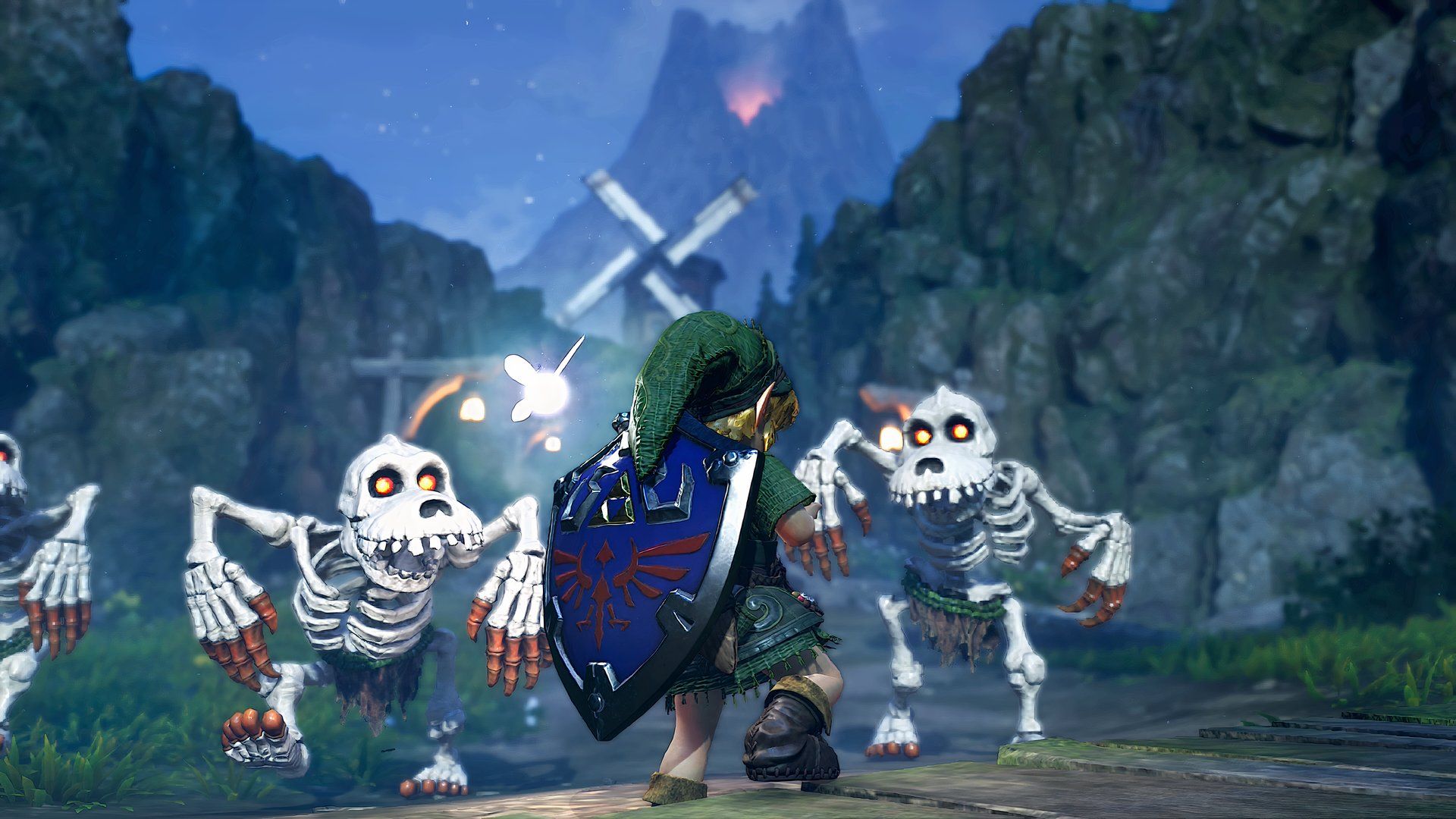


Dragon Quest 7 at 25: how each re-release smoothed out the original

Palash Bagchi
· 4 min read

Polygon is marking 25 years since Dragon Warrior 7 reached North American stores on Nov. 1, 2001, with a retrospective arguing that every later version of Dragon Quest 7 has improved on the one before it.
The outlet's case rests on two re-releases: a 2016 version for 3DS and Dragon Quest 7 Reimagined, which launched in February 2026. For players who bounced off the original, the piece frames those versions as the realistic way in.
A rough start in 2001
The original arrived late in the first PlayStation's life. Polygon describes 3D visuals with a rotatable camera that still felt dated beside late PS1 games such as Final Fantasy 9.
It was also the last series entry sold in North America under the Dragon Warrior name, and it followed two installments that never left Japan. According to the report, interest had faded and copies were hard to find.
The opening drew the sharpest criticism. The writer recalls three hours of play without meeting a single enemy, spent on puzzles instead, where older entries had players fighting within minutes.
The 3DS version
Dragon Quest 7: Fragments of the Forgotten Past launched in the West on Sep. 16, 2016. Polygon calls it a better way to play despite its portable hardware, and lists these changes:
- The lever-heavy introductory dungeon was removed
- The bottom screen glowed near stone tablet shards, which drive progression
- A pause-menu log recapped major story events and hinted at next steps
- Party members could offer suggestions when consulted
- Enemies became visible in the field
- Leveling needed less grinding, and menus were streamlined
- A bottom-screen map flagged nearby points of interest
- Quick saves worked outside churches
The story log stuck around: the outlet notes that later entries, up to Dragon Quest 11, kept it. Polygon says the 3DS release stayed the best version for a decade.
Dragon Quest 7 Reimagined
That changed with Dragon Quest 7 Reimagined in February 2026, released on:
- Switch
- Switch 2
- PlayStation 5
- Windows PC
- Xbox Series X
The remake adds a diorama-style art direction and voice acting. It also reworks vocations, letting party members hold two at once and master both, and drops the need to visit Alltrades Abbey to switch classes.
Other additions include automatic victories when striking weaker monsters on the world map, at reduced rewards, plus multiple difficulty presets, a shared inventory and auto-revive for fallen party members after battle.
Why the original never got a fair shot in North America
By Polygon's account, the 2001 release was set up to struggle before anyone pressed start. It followed two entries that skipped the West, interest had already dropped, and copies were scarce. Those conditions limited who could even try it.
Seen that way, the later versions do double duty. Beyond fixing pacing, they widened access: the 3DS edition reached a handheld audience, and Reimagined spans five platforms. Availability, not just design, separates the 2001 launch from the 2026 one.
Friction, not story, was the target
Every change Polygon lists cuts time or guesswork rather than rewriting the adventure itself. The removed dungeon, the shard glow, the story log, visible enemies and the auto-win strikes all attack waiting, wandering or grinding.
That pattern hints at how Square Enix read the game's problem. The complaints in the retrospective are about pacing and ambiguity, and none of the listed fixes touches the plot. The most direct reading is that the publisher treated the core quest as sound and the delivery as the flaw.
Why the 3DS fixes outlived the 3DS
The recap log is the clearest sign that a port can shape the main series. Polygon says later games through Dragon Quest 11 kept it. A feature built to help players returning to a handheld game after a break became a franchise habit.
This matters for how re-releases are judged. A port is often treated as a way to resell old work. Here, by the outlet's account, a portable version worked as a testing ground, and its best idea carried forward into new entries.
What auto-battles and dual vocations give up
Reimagined's convenience features hand some control from the game's design to the player's choice. Difficulty presets and one-strike wins over weak monsters let players decide how much of the old grind they want to sit through.
Polygon presents the auto-win as a welcome compromise, and the reduced rewards are part of why: skipping a fight costs something. A reasonable concern is that dual vocations and auto-revive, taken together, could soften the challenge that made class choices meaningful. The retrospective does not test that, so it stays an open question about balance rather than a finding.
What the retrospective does not settle
This is a critic's verdict, not a sales or reception report. The piece offers no figures on how Reimagined has performed, and no comment from Square Enix about why each version changed what it did.
It also does not compare the platform versions of Reimagined with one another, so anyone choosing between Switch, Switch 2, PS5, PC and Xbox Series X gets no guidance on performance. Those gaps leave the claim that every port is better as one well-argued opinion.
A remake strategy built on subtraction
The lasting lesson of Dragon Quest 7's history is that removing friction did more than adding content. The 2001 release made players wait hours for a fight; the 2026 version lets them end one with a single strike.
Key takeaways
- Dragon Warrior 7 launched in North America on Nov. 1, 2001
- The 3DS version launched in the West on Sep. 16, 2016
- Dragon Quest 7 Reimagined launched in February 2026
- Reimagined is on Switch, Switch 2, PS5, Windows PC and Xbox Series X
#dragon quest 7#dragon quest 7 reimagined#square enix#jrpg#nintendo 3ds
Source
Based on reporting by Polygon, published November 22, 2026. Gamesdle News rewrote and edited it. Read the original report →
Gamer's Choice
Game of the Year
·
A Gamesdle reader poll. Not affiliated with The Game Awards, or with any publisher or studio.
Featured
Editorial · Industry
Star Trek's bravest moments came with a flinch built in
Star Trek earned its reputation in banned broadcasts and furious phone lines. But its boldest kisses came wrapped in alibis, and once it blinked outright.
Palash Bagchi · 1 d ago · 3 min read

Editorial · Industry
Gamesdle Saturday Scorecard: GTA VI Drew 38% of Our Readers, and Reddit Was Split
Palash Bagchi · 3 d ago · 12 min read

Editorial · Daily Games
Krillion Space review: fair XP rules buried under too many layers
Palash Bagchi · 5 d ago · 2 min read
Written by
Founder and editor, Gamesdle
Palash Bagchi founded Gamesdle, the daily games board, and edits Gamesdle News. He picks which stories run, checks every story against the original report and claims, before it goes live, and links the source, wherever applicable, on each one.
CoversDaily gamesWord gamesGames industryIndie games