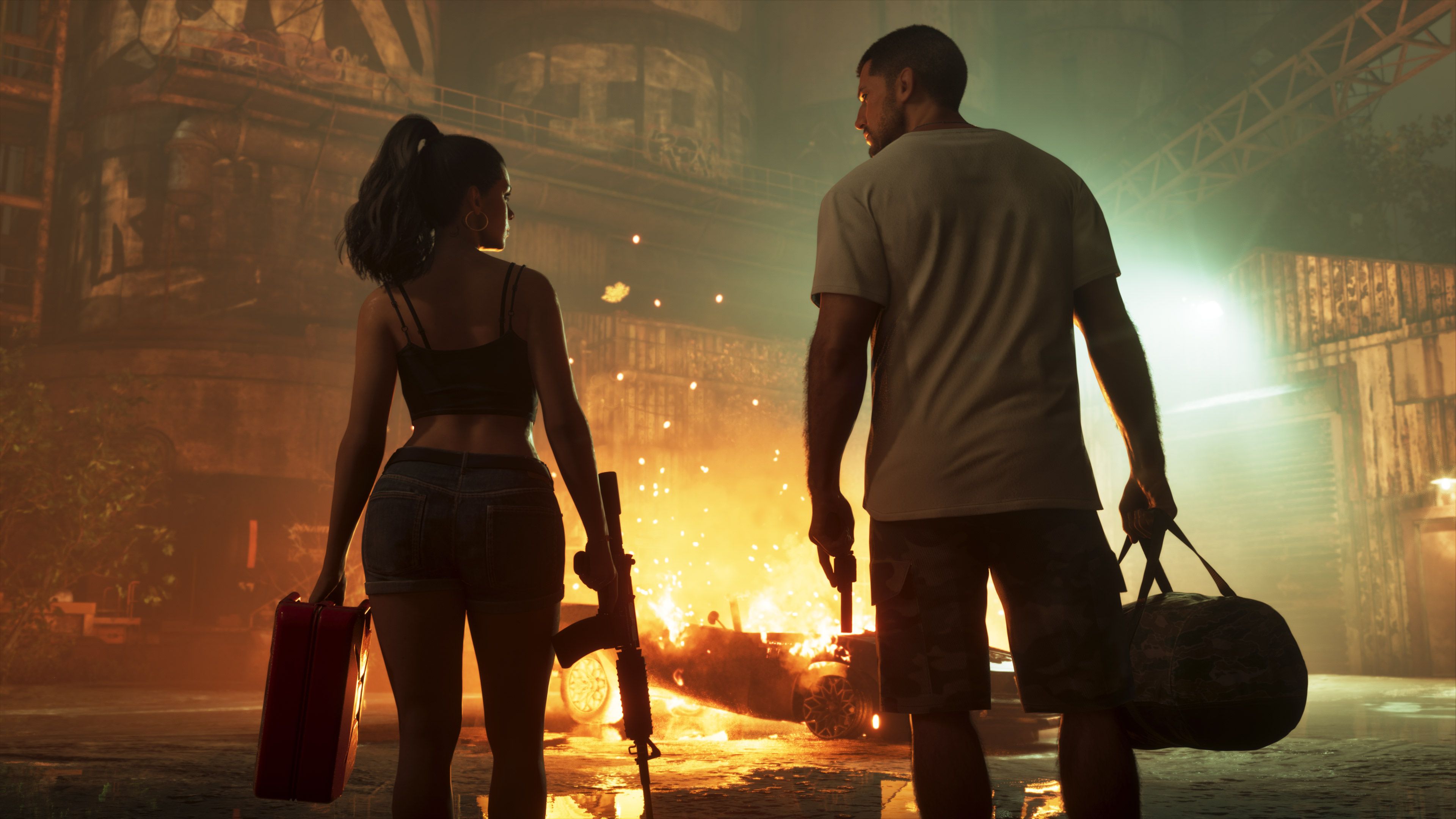


GTA 6 launch tips point to a slower, more reactive Rockstar crime game

Palash Bagchi
· 4 min read

GTA 6 is in its launch weekend, and Eurogamer has published a list of spoiler-free tips from a writer who has put close to a hundred hours into Rockstar's game. The piece went up on November 20, 2026.
The outlet's advice centers on protecting progress, managing money and resisting shortcuts. For players starting fresh in Leonida, it also confirms how several systems work, including a cash limit, a non-lethal combat option and a story that reacts to player choices.
Saving and the story
The top recommendation is to keep many save files and spread them roughly evenly across chapters. According to the report, autosave does not appear to hold up well if the console loses power or the game crashes, which the writer describes as rare.
The bigger reason is that missions and story can differ quite a lot depending on how they are played. Keeping older saves lets a player return and try different choices.
The writer also noticed that, in some choice moments, doing nothing changed the scenario. Sometimes a decision gets made for the player; other times new options appear.
Money, banking and the family goal
Once a bank account unlocks, Eurogamer advises depositing cash right away. Key details:
- Cash on hand is lost on death or arrest.
- Nearly everything can be paid for through the BuckMe account; in-game strippers are the stated exception.
- Carried cash has a $20,000 limit.
A "family savings" goal runs through the game. The writer suggests paying into it steadily while holding back spending money for things like garages and vehicle registration.
Settings, travel and pacing
The customization menu includes options to hide relationship notifications and to restore the older tap-to-sprint control. The writer, while noting they are no expert, calls the accessibility options considerable, and points to less obvious settings tied to enemy damage taken and police encounters.
Fast travel exists, but the outlet advises against it. Driving between locations surfaces emergent events ranging from single gags to full mission chains. The writer suggests Chapter 3 onward as a good point for free exploration.
Smaller systems worth knowing
The list also covers several practical mechanics:
- A silenced pistol and a shotgun sit near shipwrecks on two islands south-west of Jason's early-game home, and are kept permanently once found.
- Outfits can be saved to a car via its trunk or the wardrobe.
- Sleeping at home and then eating, drinking and showering grants lasting buffs to health, stamina and focus.
- The in-game phone, including Snapmatic and text contacts, surfaces missions.
- Public and police car trunks can hold weapons and sellable items.
- Mid-mission checkpoints are fairly generous.
In combat, a yellow hit marker means an enemy is fully incapacitated. Fighting this way makes it easier to recover "Professional" criminal status after a violent spree.
Analysis: a game that charges for impatience
Read together, the tips describe a design that penalizes rushing more than earlier crime sandboxes might lead players to expect.
The premises are all in the list. Carried cash disappears on death or arrest. Skipping travel hides emergent content. Waiting during a choice can change the outcome. Each of these rewards a player who slows down and treats the world as something to live in rather than sprint through.
The $20,000 cap on carried cash fits that pattern. Combined with the loss-on-death rule, it pushes routine money management into the loop, which looks like a deliberate source of friction rather than an oversight.
Why the save advice matters most
The save-file warning is the most consequential detail, because it touches both reliability and replay value.
On reliability, the writer's experience is that autosave may not survive a power cut or crash. That is one player's observation over roughly a hundred hours, not a confirmed bug, and the report frames it cautiously. Still, it gives launch-weekend players a practical reason to save manually.
On replay value, the claim that missions can differ "quite a lot" implies a branching structure deep enough that one playthrough will not show everything. If that holds, staggered saves become the tool for seeing alternate outcomes without restarting.
Non-lethal play as a real option
The yellow hit marker system suggests restraint is built into GTA 6's rules, not just tolerated.
The outlet says killing is very rarely required, and ties non-lethal play to keeping the "Professional" status. That links combat style to a reputation mechanic. The writer also warns that a violent approach may carry consequences, some not obvious in advance.
What the list does not say is exactly what those consequences are, or how far the Professional status affects missions or the story. That is a gap worth watching as more players report their experiences.
What a guide can and cannot confirm
This is advice from one long playthrough, so its strongest value is in confirming systems exist, not in measuring how they behave for everyone.
Mechanics like the BuckMe account, the cash cap, outfit saving and sleep buffs read as firm. Judgments such as Chapter 3 being the right moment to explore, or checkpoints helping with progress-blocking bugs, reflect one writer's path. Patch notes from Rockstar or wider player reports would be the way to confirm or challenge them.
The clearest takeaway is that GTA 6 appears to reward the player who waits a beat, both at the decision prompt and behind the wheel.
Key takeaways
- Carried cash is lost on death or arrest and capped at $20,000
- Nearly everything can be paid via the in-game BuckMe bank account
- Yellow hit markers mean enemies are incapacitated; killing is rarely required
- Eurogamer suggests manual saves spread across chapters as autosave may fail
#gta 6#rockstar#open world#action#console
Source
Based on reporting by Eurogamer, published November 20, 2026. Gamesdle News rewrote and edited it. Read the original report →
Gamer's Choice
Game of the Year
·
A Gamesdle reader poll. Not affiliated with The Game Awards, or with any publisher or studio.
Featured


Written by
Founder and editor, Gamesdle
Palash Bagchi founded Gamesdle, the daily games board, and edits Gamesdle News. He picks which stories run, checks every story against the original report and claims, before it goes live, and links the source, wherever applicable, on each one.
CoversDaily gamesWord gamesGames industryIndie games