

Universal Paperclips creator Frank Lantz mixes spelling and tower defense
#towers of babble#frank lantz#universal paperclips#word games#tower defense#roguelike
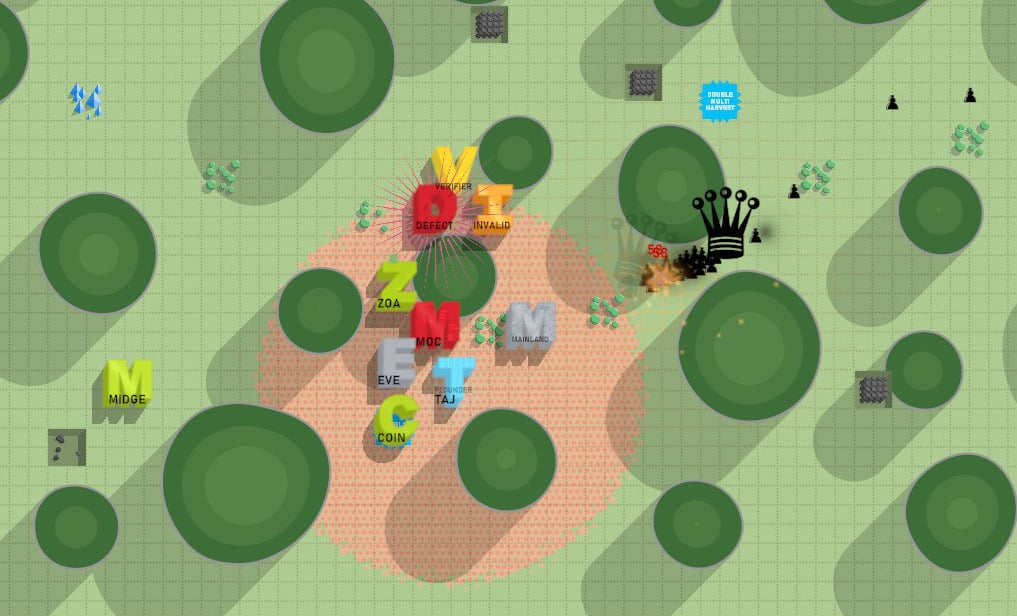
Frank Lantz, the developer behind Universal Paperclips, has a new indie game called Towers of Babble that combines Scrabble-style spelling with tower defense and roguelike elements, Kotaku reported on November 15, 2026.
Kotaku's hands-on write-up describes how a campaign opens. The player starts with a small set of letter tiles, and the words spelled from them decide what gets placed on the map.
How the game works
Nouns become units. According to Kotaku, each noun has a role fixed in advance, either as a harvester that gathers resources or as a defensive unit. Verbs and modifiers work differently: they become power-ups attached to those nouns.
Harvested resources pay for upgrades. Kotaku's examples include access to a bigger selection of tiles and giving premium stats to specific letters.
A level is won by surviving enough waves of enemies, and each level is itself linked to a word. After a win, some elements carry over into the next attempt, which is where the roguelike structure comes in.
Kotaku puts the scale at 120,000 levels and roughly 200,000 word units. Many words connect loosely to their meanings, producing effects such as healing, poison clouds that deal chip damage, tougher shields and large missiles. Players can also chain words together into long compound strings.
Players are called Librarians. Each plays alone, but every conquered word adds to one large tower that all players build together. Kotaku notes that what happens once every level is cleared is unknown.
Kotaku's verdict on the strategy
The reviewer was lukewarm on the tactical side. Kotaku says there are many map types calling for different approaches and a range of enemy types, but that attack patterns tend to be predictable and fights were easy to win.
The piece is more positive about experimentation. Kotaku compares the appeal to Scribblenauts, arguing that much of the fun comes from entering words just to see how the game turns them into units.
The report does not give platforms, a price or a release date.
Analysis: a word game built on structure
The most direct reading of the design is that Towers of Babble treats vocabulary as a resource system rather than a test of speed or recall. Assigning each noun to a fixed role means a word's value depends on what it becomes on the map, not only on how many letters it uses or how rare they are. That differs from the scoring logic of a standard tile game, where the word itself is the reward.
The split between nouns and other parts of speech also suggests a layered approach to building. Nouns provide bodies on the field, while verbs and modifiers adjust them. If that split works as described, players have a reason to think about grammar as well as spelling, since a strong noun alone may not be enough without the right modifier.
The upgrade options Kotaku lists point the same way. A larger tile pool widens what can be spelled, and premium stats on certain letters reward planning around specific letters. Both suggest a progression loop where vocabulary choices compound over time, which fits the roguelike carryover the report describes.
Analysis: the shared tower
The shared tower is the feature most likely to set the game apart from a solo puzzle experience. Kotaku describes single-player sessions that each feed one collective structure. That gives individual play a visible contribution to something larger, a structure that tends to give players a reason to return.
The scale figures matter here. With 120,000 levels, each tied to a word, clearing them all would plausibly require a large number of players over a long period. The report's note that the outcome of finishing is unknown suggests the endpoint is deliberately left open, though the report does not say whether that is a design choice or simply undisclosed.
Several things the report does not address would shape how this works in practice: whether the tower's progress is visible to all players in real time, whether individual contributions are tracked, and whether a level cleared by one player is closed to others.
Analysis: limits and open questions
Kotaku's criticism is worth weighing on its own terms. Predictable attack patterns and easy wins are a real concern for a game that uses tower defense as its frame, because that genre usually depends on pressure. A reasonable reading is that the game's strength lies in its word system, and that players looking mainly for a tactical challenge may find it thin, at least based on this one review.
At the same time, the reviewer's main praise centers on discovery, which aligns with the loose link between words and their effects. With around 200,000 word units, the experimentation the review enjoyed has a large space to run in. Whether that sustains interest across many runs is something a single impressions piece cannot settle.
The largest gaps are practical. The report names no platforms, no price and no release date, so a careful reader would want confirmation from Lantz or an official store page before assuming where or when the game can be played. The 120,000 and 200,000 figures also come through Kotaku's description and would be worth checking against official material.
For Lantz, the project continues a link to unconventional design that Kotaku draws by calling him an alternative indie developer best known for Universal Paperclips. The connection most likely to matter to players, though, is the one Kotaku itself makes to Scribblenauts: a game whose value rests on how inventively it interprets what the player types.
Key takeaways
- Towers of Babble is a new game from Universal Paperclips creator Frank Lantz
- Mixes Scrabble-style spelling, tower defense and roguelike runs
- Kotaku cites 120,000 levels and about 200,000 word units
- Conquered words feed one tower shared by all players
Source
Based on reporting by Kotaku, published November 15, 2026. Gamesdle News rewrote and edited it. Read the original report →
Featured

Editorial · PC
Arthas and Stratholme are still Warcraft's most heartbreaking story
The Culling of Stratholme endures because Arthas falls not out of evil but out of love, grief and certainty, and he loses everyone who might have saved him.
Palash Bagchi · 4 h ago · 3 min read

Releases
Bethesda confirms Fallout 3, New Vegas remasters and Fallout 5
Polygon · 2 d ago · 1 min read

Editorial · Daily Games
Tired of Krillion? Krillion Space is the change of scenery
Palash Bagchi · 3 d ago · 2 min read

Written by
Founder and editor, Gamesdle
Palash Bagchi founded Gamesdle, the daily games board, and edits Gamesdle News. He picks which stories run, checks every story against the original report and claims, before it goes live, and links the source, wherever applicable, on each one.
CoversDaily gamesWord gamesGames industryIndie games